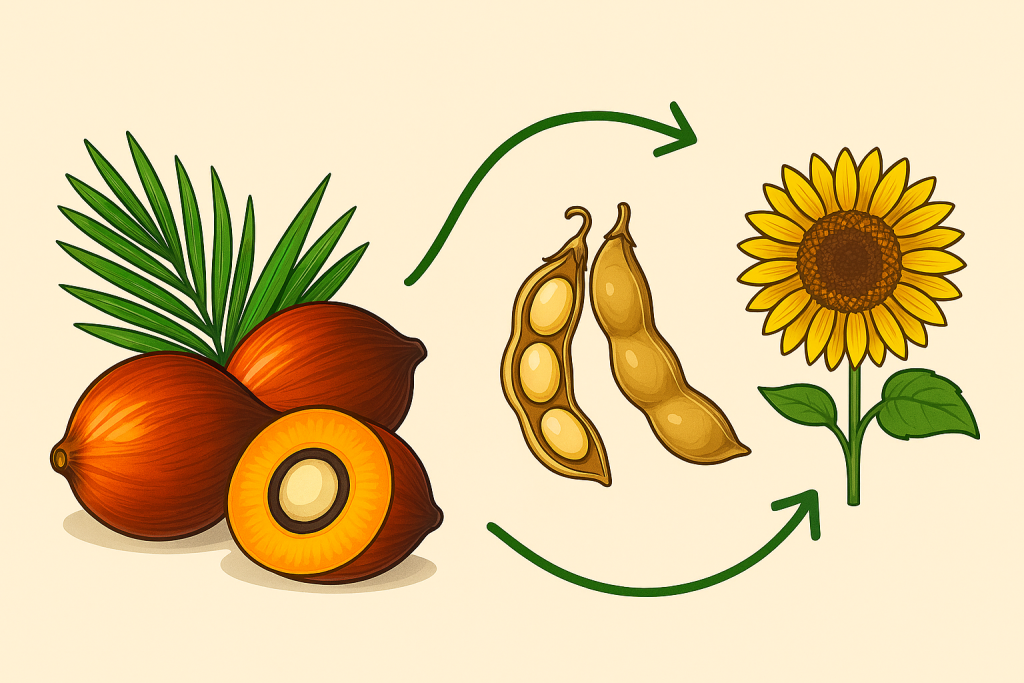
Crude palm oil (CPO) futures on the Bursa Malaysia Derivatives (BMD) rose on Monday, supported by stronger soybean oil futures on the CME during Asia trading hours and sideways movements in Chinese vegetable oil markets. The uplift in external oils helped reinforce sentiment across the palm complex despite mixed fundamentals.
Inter‑Oil Dynamics: How Palm Oil Moves With Other Soft Oils
Vegetable oils trade as an interconnected system. Although each oil has its own supply and demand story, price movements are highly correlated because refiners, food manufacturers, and biodiesel producers constantly switch between oils based on cost and availability.
Palm Oil & Soybean Oil
These two dominate global edible oil consumption, so their prices often move together.
- Soybean oil frequently acts as the price leader, especially during U.S. trading hours.
- When soybean oil strengthens, palm oil becomes the cheaper alternative, attracting demand and lifting prices.
- When soybean oil weakens, palm oil loses competitiveness and tends to follow lower.
Sunflower Oil
A premium oil used heavily in Europe and MENA.
- Supply disruptions—such as geopolitical events—push sunflower oil higher.
- Buyers then shift to soybean or palm, creating upward pressure across the complex.
Canola (Rapeseed) Oil
Strongly linked to the energy market due to biodiesel demand.
- Rising crude oil improves biodiesel margins, lifting canola prices.
- Higher canola values often spill over into soybean and palm oil.
Corn Oil
A smaller market but directionally aligned with soybean oil because both come from the U.S. crushing industry.
- Strength in corn oil tightens the overall soft oil balance, indirectly supporting palm.